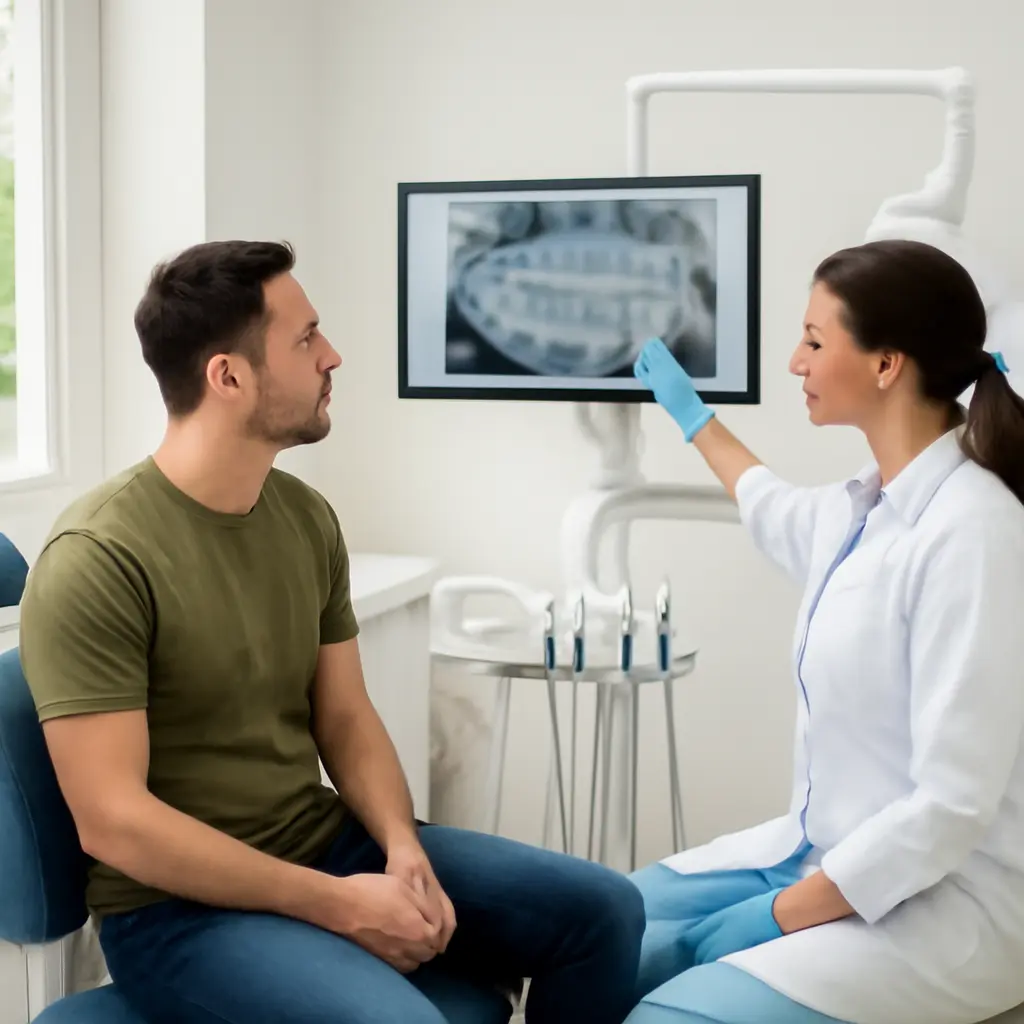
Dental technology includes the tools, materials, and digital systems used to prevent, diagnose, and treat oral disease. A common misconception is that newer technology automatically makes dental care more painful, costly, or necessary; in reality, technology can improve precision and comfort, but its value depends on the clinical need, the evidence, and the dentist’s judgment. The distinction matters: the World Health Organization estimated that oral diseases affected nearly 3.5 billion people worldwide in 2019, while the U.S. Centers for Disease Control and Prevention reports that about one in five U.S. adults has untreated tooth decay. Understanding what imaging, digital scanning, lasers, and artificial intelligence can—and cannot—do helps patients ask better questions and make informed choices.
Dental Technology Benefits and Limits in Treatment Decisions
Dental technology is not a treatment decision by itself. The American Dental Association (ADA) describes evidence-based dentistry as integrating the best available scientific evidence with a clinician’s expertise and a patient’s needs and preferences. In practice, a device may support diagnosis or treatment, but it does not determine whether a procedure is appropriate. Benefits can include more detailed images, digital records, improved fit, or more targeted care; limits include cost, operator skill, radiation exposure for some imaging, and the possibility of false or incomplete results.
The misconception that newer always means better
“Newer” describes when a technology appeared, not how well it has been shown to work for a particular patient. A digital workflow may make a crown scan easier to share with a dental laboratory, for example, but it does not guarantee that the crown will fit perfectly or last longer. The ADA’s evidence-based approach asks clinicians to weigh research alongside their professional assessment and a patient’s circumstances. Patients can ask what clinical problem a tool addresses, what alternatives exist, and whether the recommendation would change without the technology.
The misconception that technology replaces the dentist
Dental instruments and software can collect or analyze information; they do not independently provide the full context of an examination. A dentist considers symptoms, medical and dental history, examination findings, and test results together. The U.S. Food and Drug Administration (FDA) evaluates medical devices for their intended uses, but regulatory clearance or authorization is not a blanket guarantee that a device is suitable for every patient or clinical situation. Technology supports professional judgment rather than removing the need for it.
These broad principles are especially useful when considering diagnostic technologies. Imaging can reveal structures not visible during a routine visual examination, but more information is not automatically better if a test is unnecessary or its findings are misunderstood.
Dental Imaging Accuracy and Radiation Misconceptions
Dental imaging uses methods such as conventional X-rays and cone-beam computed tomography (CBCT) to help assess teeth, roots, bone, and surrounding structures. The ADA and FDA recommend that dental radiographs be prescribed based on a patient’s individual clinical needs, rather than on a fixed schedule for everyone. Imaging can support diagnosis and treatment planning, but it cannot guarantee that every condition will be detected or that a suggested procedure is necessary.
The misconception that dental X-rays are either completely harmless or inherently dangerous
Dental X-rays use ionizing radiation, so exposure should be justified and kept as low as reasonably achievable while still producing useful images. The National Council on Radiation Protection and Measurements has reported that medical exposure—including dental imaging—accounts for a substantial share of the average U.S. population’s exposure to ionizing radiation; however, that broad estimate includes many types of medical procedures and should not be read as the dose from an individual dental X-ray. Modern dental imaging protocols are designed to limit exposure, and the appropriate examination depends on the clinical question, the patient’s age and history, and prior images.
Patients can ask why an image is recommended, whether a recent image can be used, and whether a lower-exposure option will answer the question. Pregnant patients should tell their dental team, who can consider the urgency and appropriate precautions rather than assuming that all dental imaging is automatically prohibited.
The misconception that a 3D scan is always more accurate or necessary
CBCT produces three-dimensional images and can be useful for selected questions, such as evaluating complex root anatomy or planning some implant procedures. It is not a routine upgrade required for every checkup. The ADA’s patient-selection guidance emphasizes that CBCT should be used when the expected diagnostic benefit justifies the additional exposure and when the information is likely to affect care. A 3D image may show more anatomy, but it can also reveal incidental findings that need interpretation and sometimes further assessment.
Imaging is only one part of diagnosis. The next set of misconceptions concerns technologies that help dentists examine the mouth or design restorations without relying solely on traditional impressions.
Digital Scanning and CAD/CAM Misconceptions
Intraoral scanners capture digital images of teeth and oral tissues, while computer-aided design and manufacturing (CAD/CAM) systems help design and produce restorations such as crowns. These tools can streamline communication and reduce reliance on conventional impression materials in some cases. Their performance still depends on the clinical situation, the quality of the scan, the design, the materials, and the skill of the dental team.
The misconception that digital impressions are always perfect
A digital scan is a measurement, not a guarantee of accuracy. Saliva, movement, limited access, reflective surfaces, and the shape of the prepared tooth can affect image capture. The dentist may need to rescan an area or choose another impression method if the digital record is incomplete. A systematic review published in the Journal of Prosthetic Dentistry found that digital impressions can be clinically useful for many fixed restorations, while also noting that accuracy varies with the procedure and scanning conditions.
The misconception that same-day crowns are always stronger or longer-lasting
Some CAD/CAM systems allow a restoration to be designed and milled in a dental office during one appointment. This can reduce the number of visits for selected cases, but same-day availability does not establish that a restoration is superior to one made through a laboratory workflow. Material choice, bite forces, tooth condition, fit, and maintenance all influence outcomes. Patients should ask which material is proposed, why it suits their tooth, and whether the case is appropriate for an in-office restoration.
Digital workflows can also affect orthodontic and implant planning, but speed and visual sophistication should not be confused with a guaranteed result. That distinction is particularly important for emerging tools that analyze clinical data.
Dental Lasers and Artificial Intelligence Misconceptions
Dental lasers deliver concentrated light energy for specific soft-tissue or hard-tissue procedures, while artificial intelligence (AI) systems analyze data such as radiographs or clinical records. Both are categories of technology, not single treatments. Their capabilities and evidence vary by device and intended use, so claims should be evaluated individually rather than generalized across all lasers or AI products.
The misconception that lasers make dental treatment painless
A dental laser may be useful for selected procedures, but it does not eliminate discomfort in every case or replace anesthesia whenever anesthesia is needed. The FDA authorizes or clears particular laser devices for defined uses; this does not mean every laser is suitable for every dental procedure. Whether a laser is appropriate depends on the tissue being treated, the condition, the equipment, and the clinician’s training. Patients should ask what the laser is intended to do, what sensations or recovery to expect, and what alternatives are available.
The misconception that AI can diagnose or plan treatment on its own
AI can help flag patterns in images or organize information, but an algorithm’s output is not the same as a complete diagnosis. Performance can vary with the data used to develop and test a system, image quality, and the patient population. The FDA maintains a list of AI-enabled medical devices authorized for marketing, including products intended for dental or oral-health applications; authorization applies to a specific product and use, not to AI in general. Clinicians remain responsible for interpreting results in context and discussing options with patients.
A practical example is AI-assisted analysis of dental radiographs. A tool may highlight areas that merit closer review, but a dentist must compare those prompts with the image, examination, symptoms, and history. Patients can ask whether AI contributed to a recommendation and how the clinician verified its output.
How Patients Can Evaluate Technology-Based Recommendations
The most reliable way to assess a dental technology recommendation is to connect the device to a clear clinical question. A useful conversation covers the expected benefit, known limitations, alternatives, costs, and what may happen if treatment is delayed or declined. This approach applies to familiar X-rays as much as to newer scanners, lasers, and AI systems.
- Ask what condition or treatment decision the technology is meant to clarify.
- Ask whether existing records or a less complex method could answer the same question.
- Request an explanation of benefits, risks, limitations, and reasonable alternatives.
- Ask how the result will affect the treatment plan and whether a second opinion is appropriate.
- For a costly or extensive procedure, request a written treatment plan and itemized estimate.
These questions are especially valuable when a recommendation involves additional imaging or a procedure with multiple alternatives. Clear communication helps patients distinguish a useful diagnostic aid from a technology-driven upsell, without dismissing tools that may genuinely improve care.
Conclusion: Informed Decisions About Dental Technology
Dental technology can improve how clinicians collect information, plan treatment, and make restorations, but it is not automatically necessary, painless, or more effective simply because it is digital or new. Evidence-based care combines research, clinical expertise, and patient preferences. Imaging should be justified for the individual; digital scans and CAD/CAM systems have practical limits; and lasers or AI tools should be judged by their specific intended uses and evidence. Patients can take an active role by asking what a technology contributes, what alternatives exist, and how its results will be interpreted. For further guidance, consult the ADA’s patient education resources and discuss individual concerns with a qualified dental professional.
Sources: World Health Organization, “Oral health,” https://www.who.int/news-room/fact-sheets/detail/oral-health; Centers for Disease Control and Prevention, “Oral Health Fast Facts,” https://www.cdc.gov/oral-health/data-research/facts-stats/; American Dental Association, “Evidence-Based Dentistry,” https://www.ada.org/resources/research/science-and-research-institute/evidence-based-dentistry; American Dental Association and U.S. Food and Drug Administration, “Dental Radiographic Examinations: Recommendations for Patient Selection and Limiting Radiation Exposure,” https://www.ada.org/resources/ada-library/oral-health-topics/x-rays; National Council on Radiation Protection and Measurements, “Ionizing Radiation Exposure of the Population of the United States,” NCRP Report No. 184, https://ncrponline.org/publications/reports/ncrp-report-184/; American Dental Association, “Cone Beam Computed Tomography,” https://www.ada.org/resources/ada-library/oral-health-topics/cone-beam-computed-tomography; Joda, T., et al., “Digital Impressions in Fixed Prosthodontics: A Systematic Review,” The Journal of Prosthetic Dentistry, https://doi.org/10.1016/j.prosdent.2016.06.005; U.S. Food and Drug Administration, “Artificial Intelligence-Enabled Medical Devices,” https://www.fda.gov/medical-devices/software-medical-device-samd/artificial-intelligence-enabled-medical-devices; U.S. Food and Drug Administration, “Laser Products and Instruments,” https://www.fda.gov/radiation-emitting-products/laser-products-and-instruments.


